Inclusion Diagnostic Tool
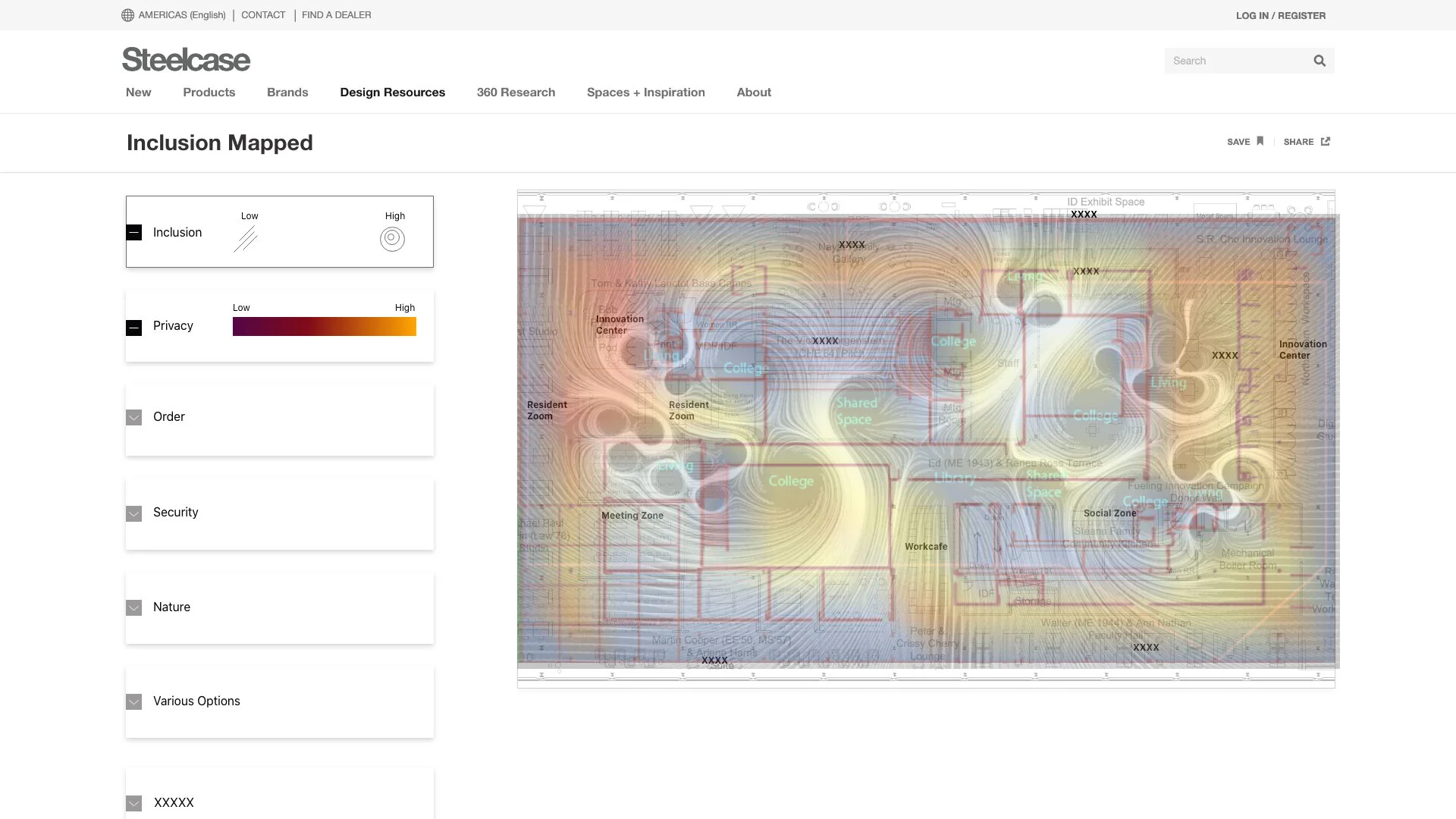
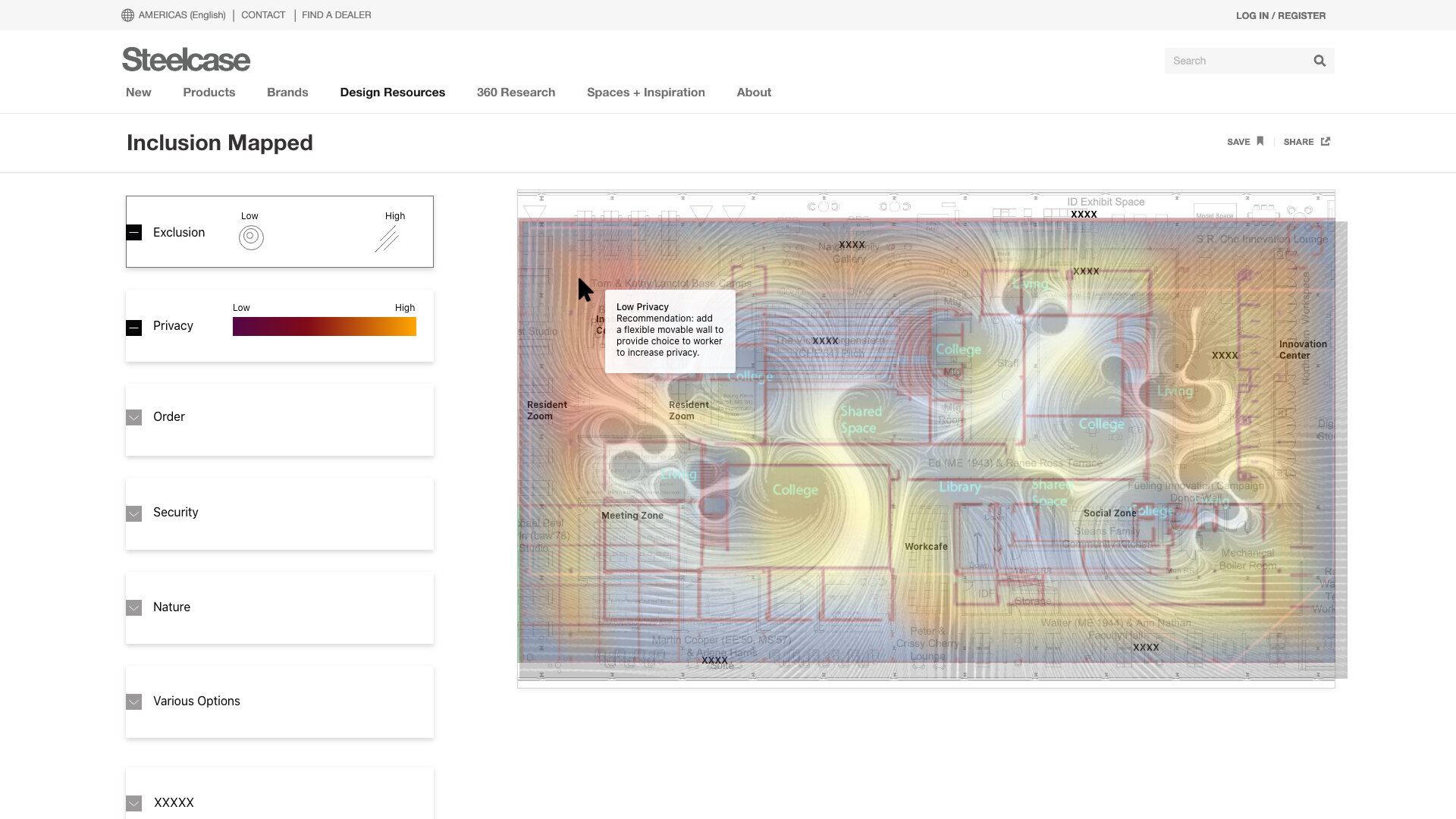
We have developed a computational design tool that extracts encoded spatial data to identify hotspots and locuses of inclusion and exclusion, as well as the factors that contribute to those feelings. This tool allow users to upload floor plans, and have them evaluated across several factors relevant to inclusive environment creation. Optimization algorithms are employed to make recommendations for improvement to the designer.
The algorithms that determine if an environment is inclusive are trained on the below principles:
Offers a diversity of options for individuals to choose from
Can evolve and adapt to the people within it
Accommodates multiple work styles
Video by Minyi Zhang
Design Process
We began by rejecting assumptions, and rigorously researching to understand what inclusive design means, looks like, acts like, and affords in a workplace.

Principle One
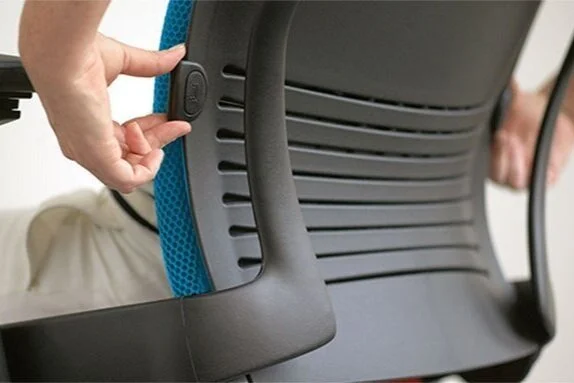
Reduces the cognitive, emotional, and physical load of the user.
Principle Two
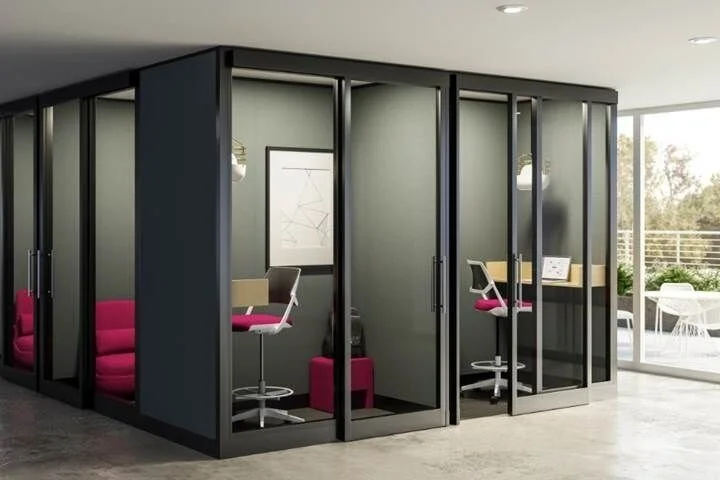
Accommodates a wide range of potential users, and offers those individuals a choice in how they engage with the design.
Principle Three
Enables individuals to fully participate in an activity or space and/or adjust the threshold for full participation.

How might we reconfigure factors of exclusion to enable people to comfortably reach their potential?
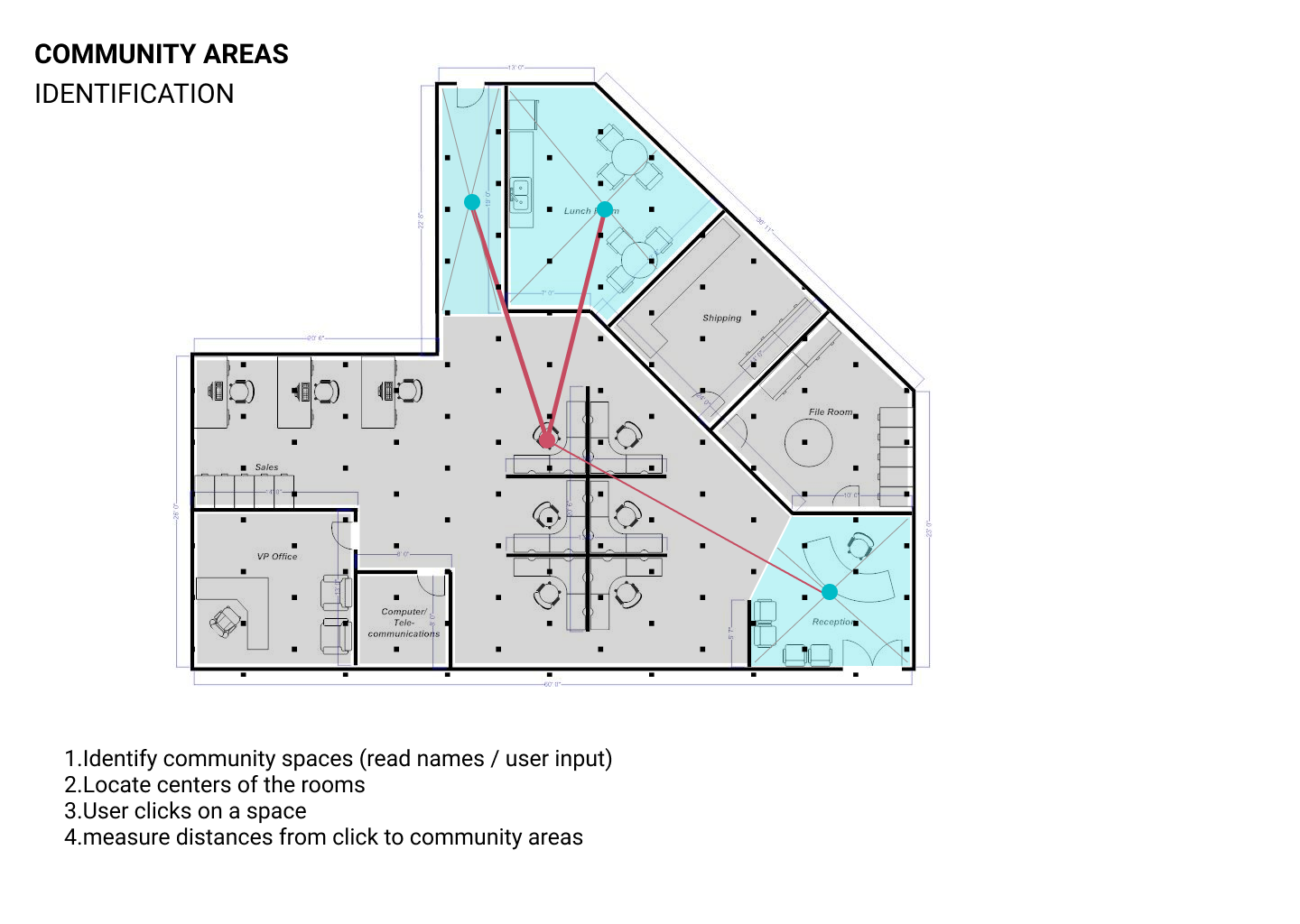
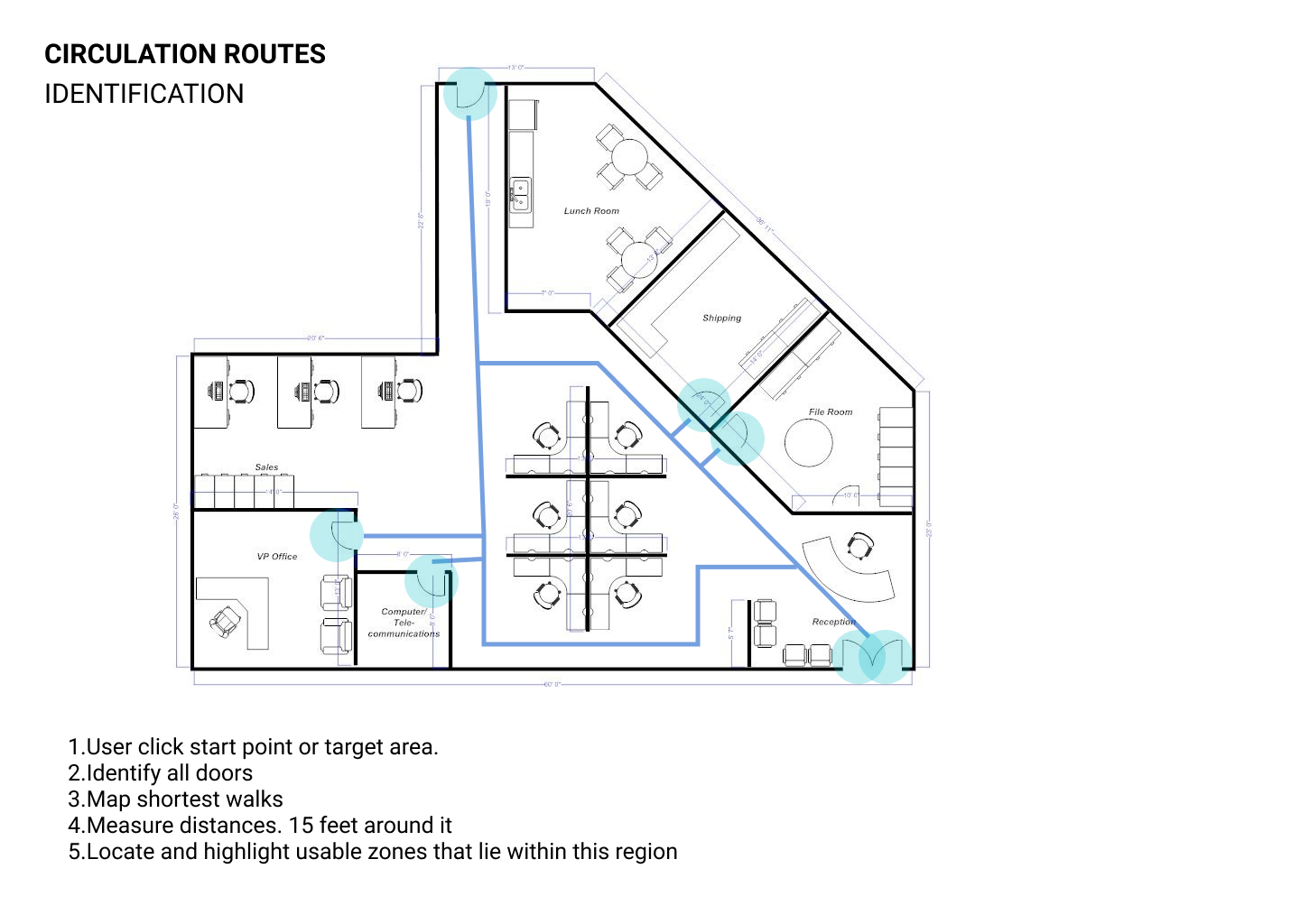
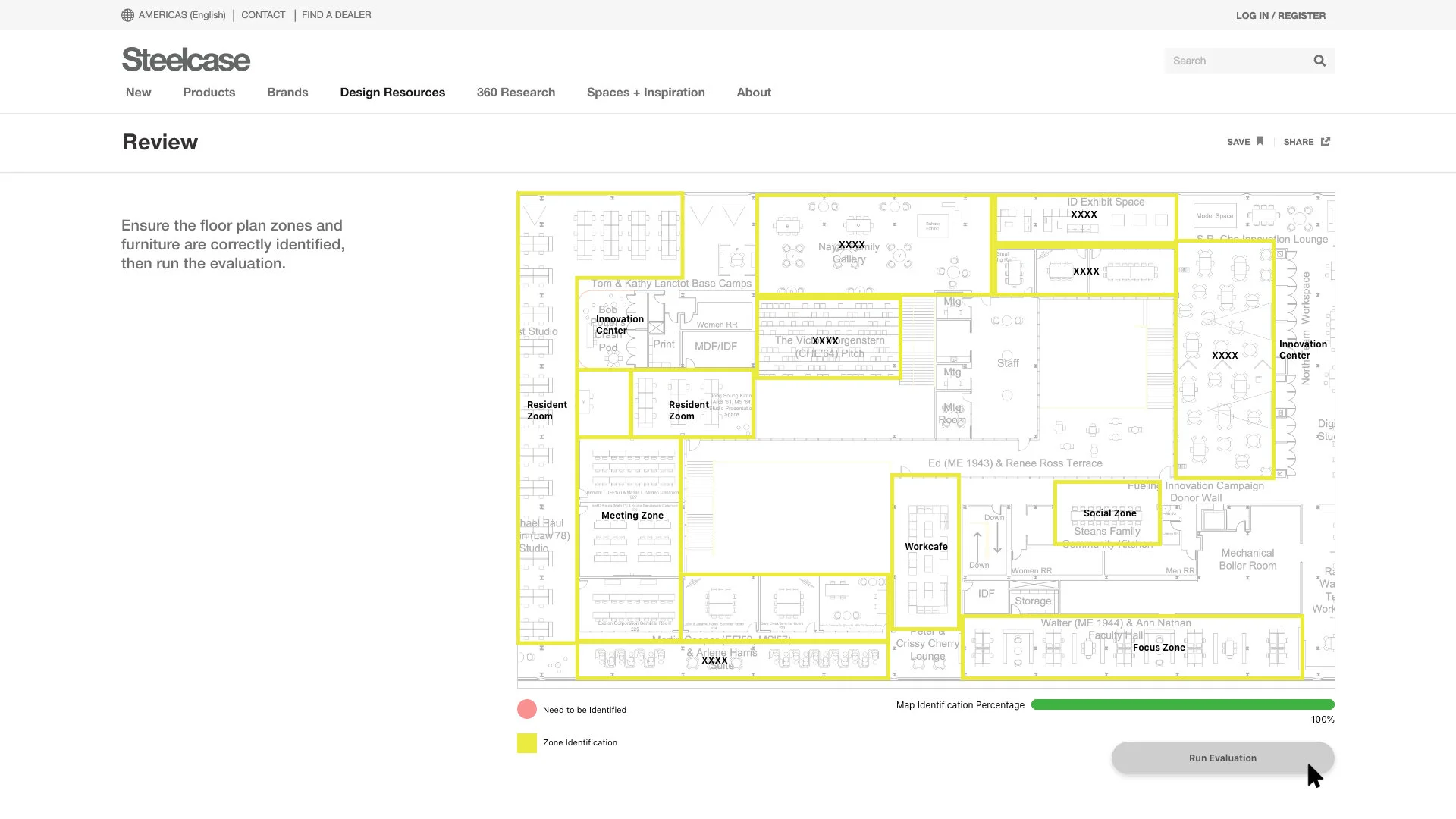
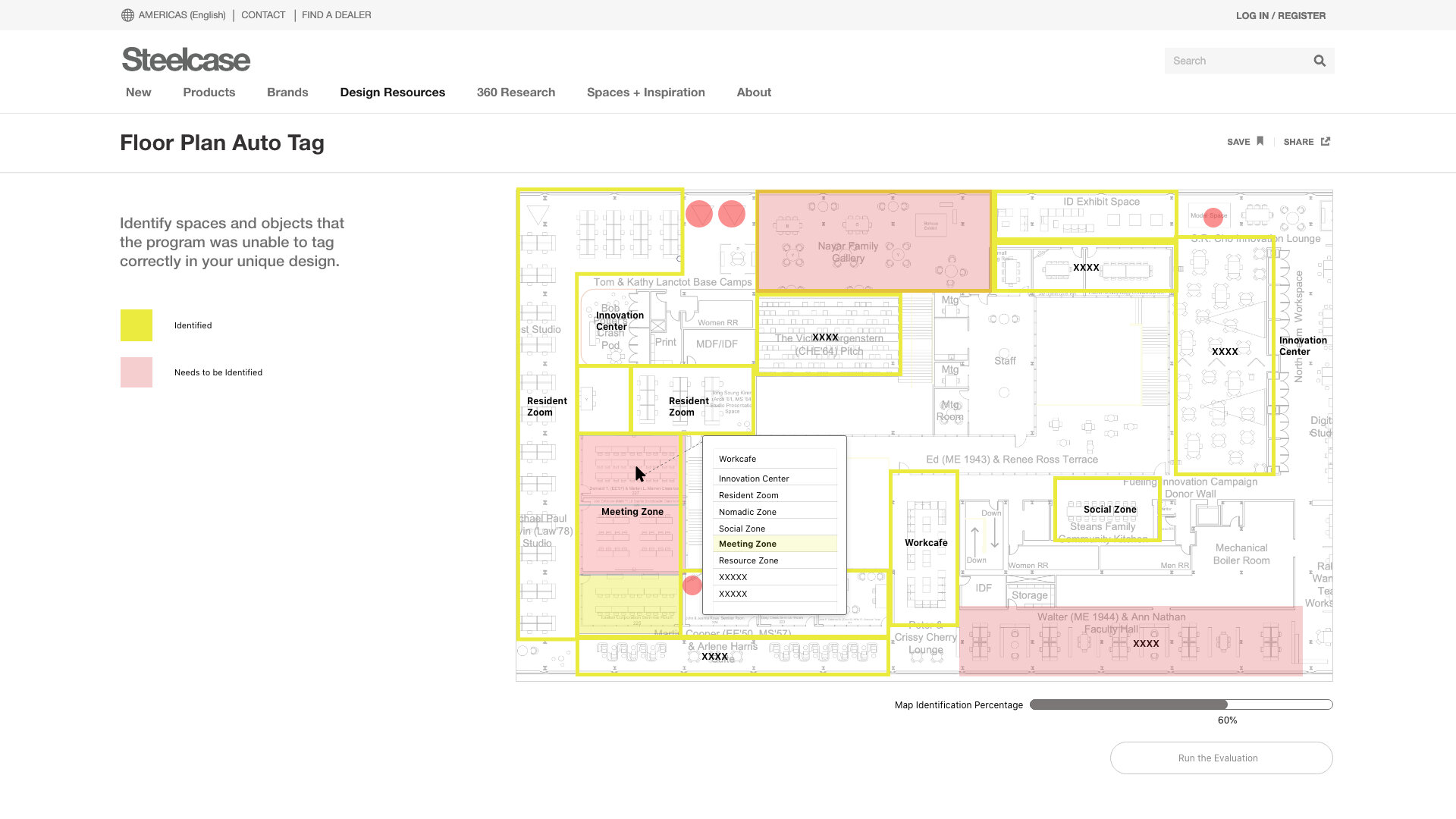
Floor plans are rich in data, and if analyzed properly, tell a story of inclusion or exclusion. See the prototyped tool below:
We developed a technology that extracts encoded spatial data to identify hotspots and locuses of inclusion and exclusion, as well as the factors that contribute to those feelings. This tool allow users to upload floor plans, and have them evaluated across several factors relevant to inclusive environment creation.
Optimization algorithms are employed to make recommendations for improvement to the designer. We envision this tool acting as a complement to the current specifying process to build inclusivity into designs.
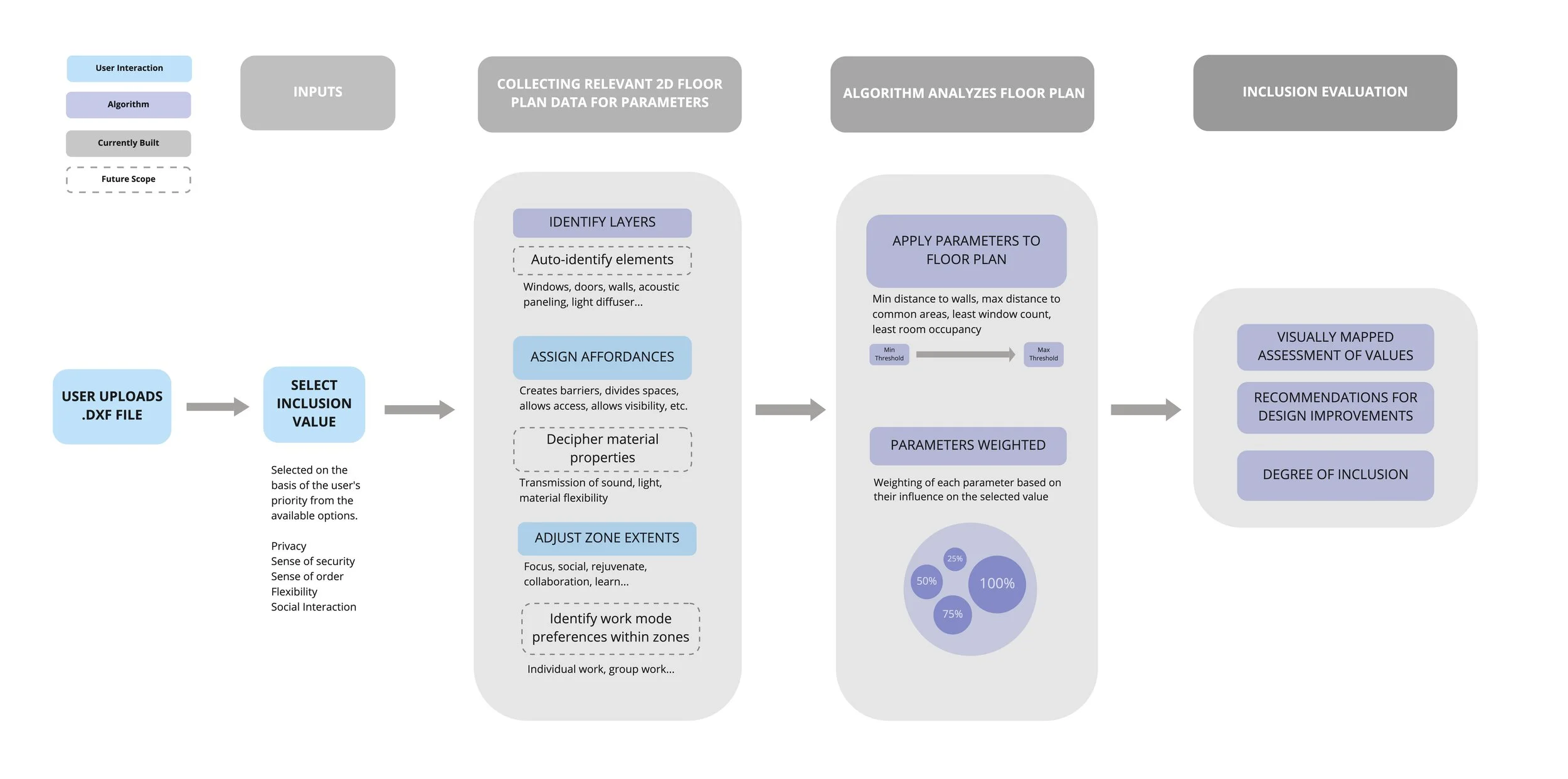
How it Works
Inclusion Diagnostic Floor Plan Tool Process Flow
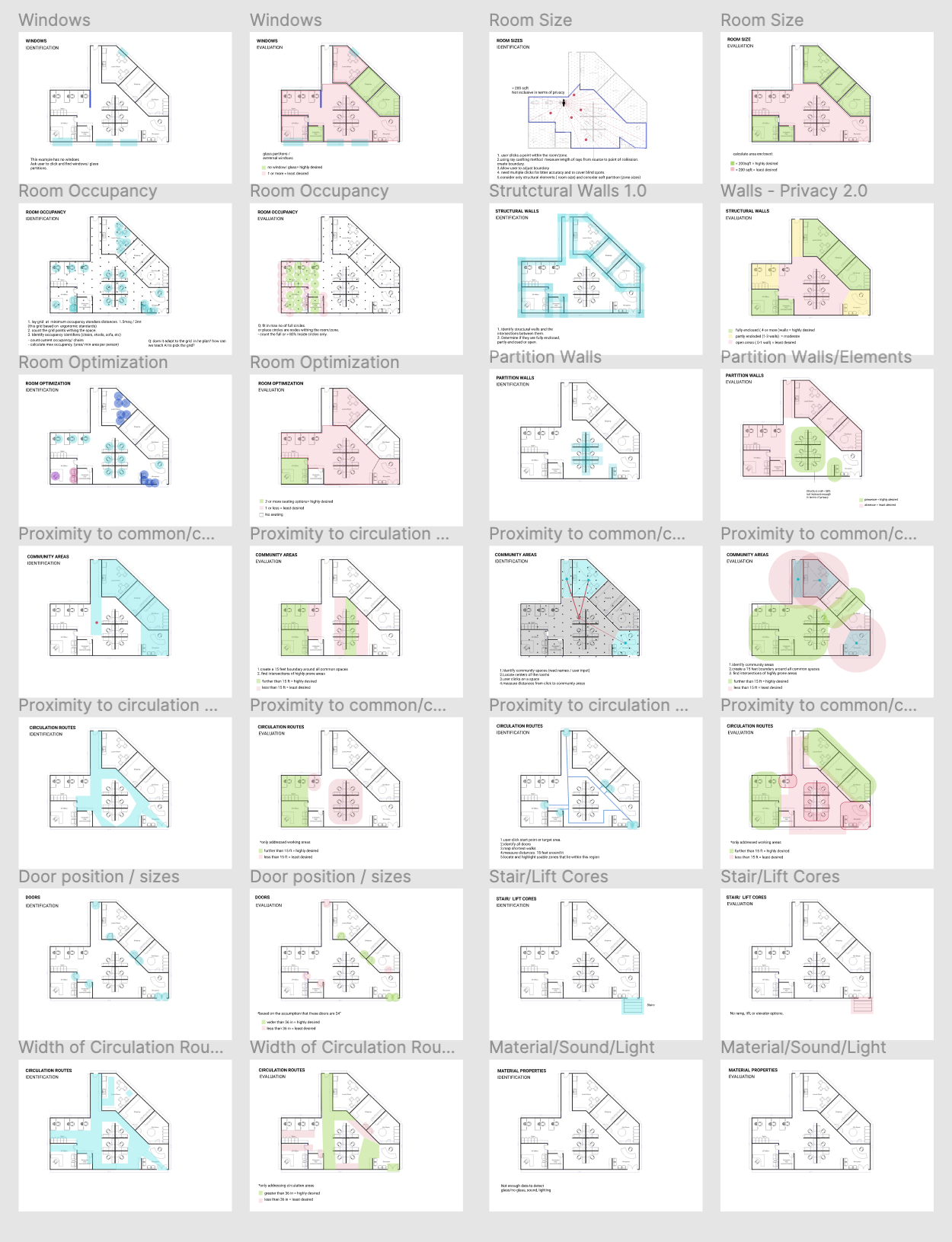
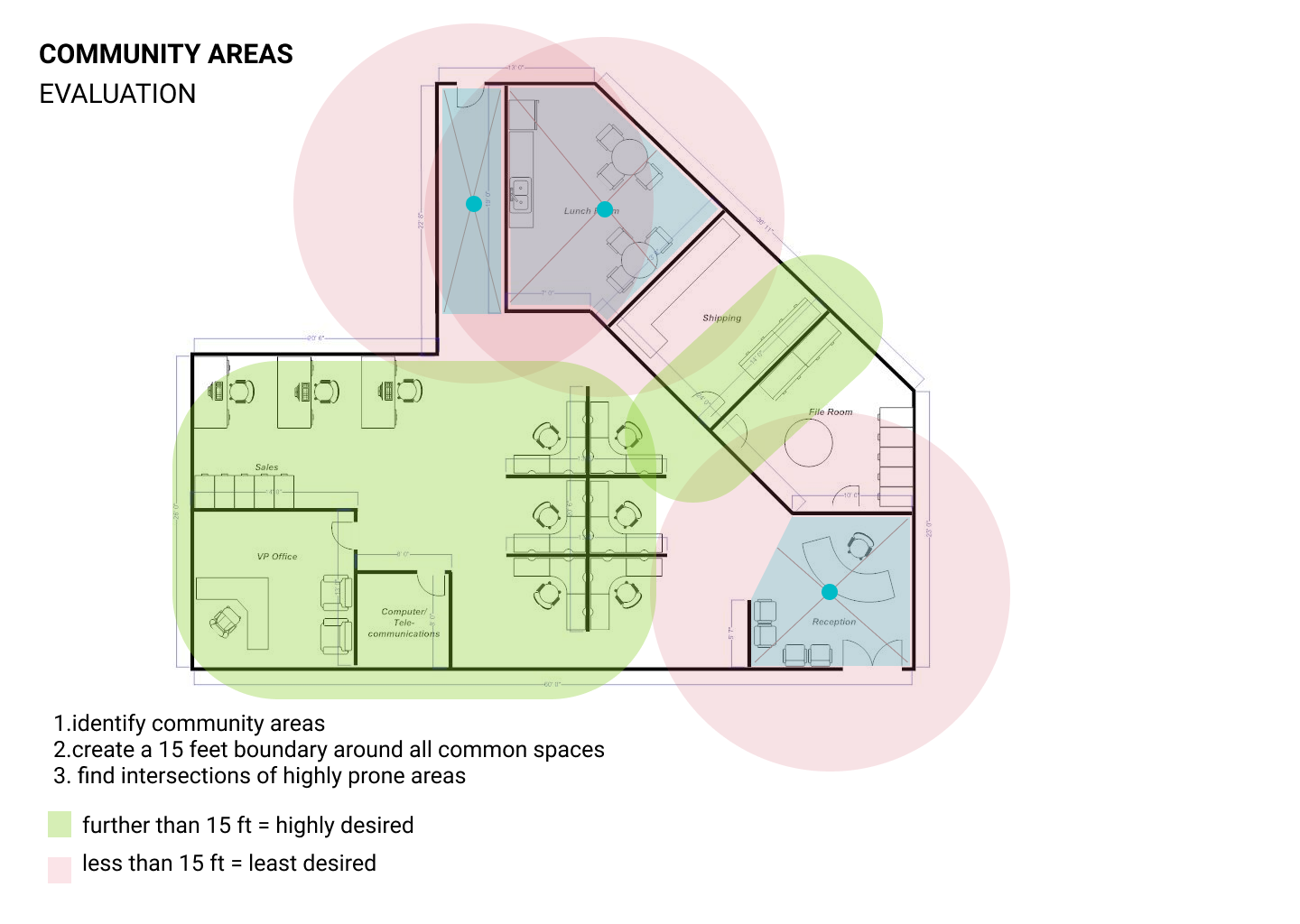
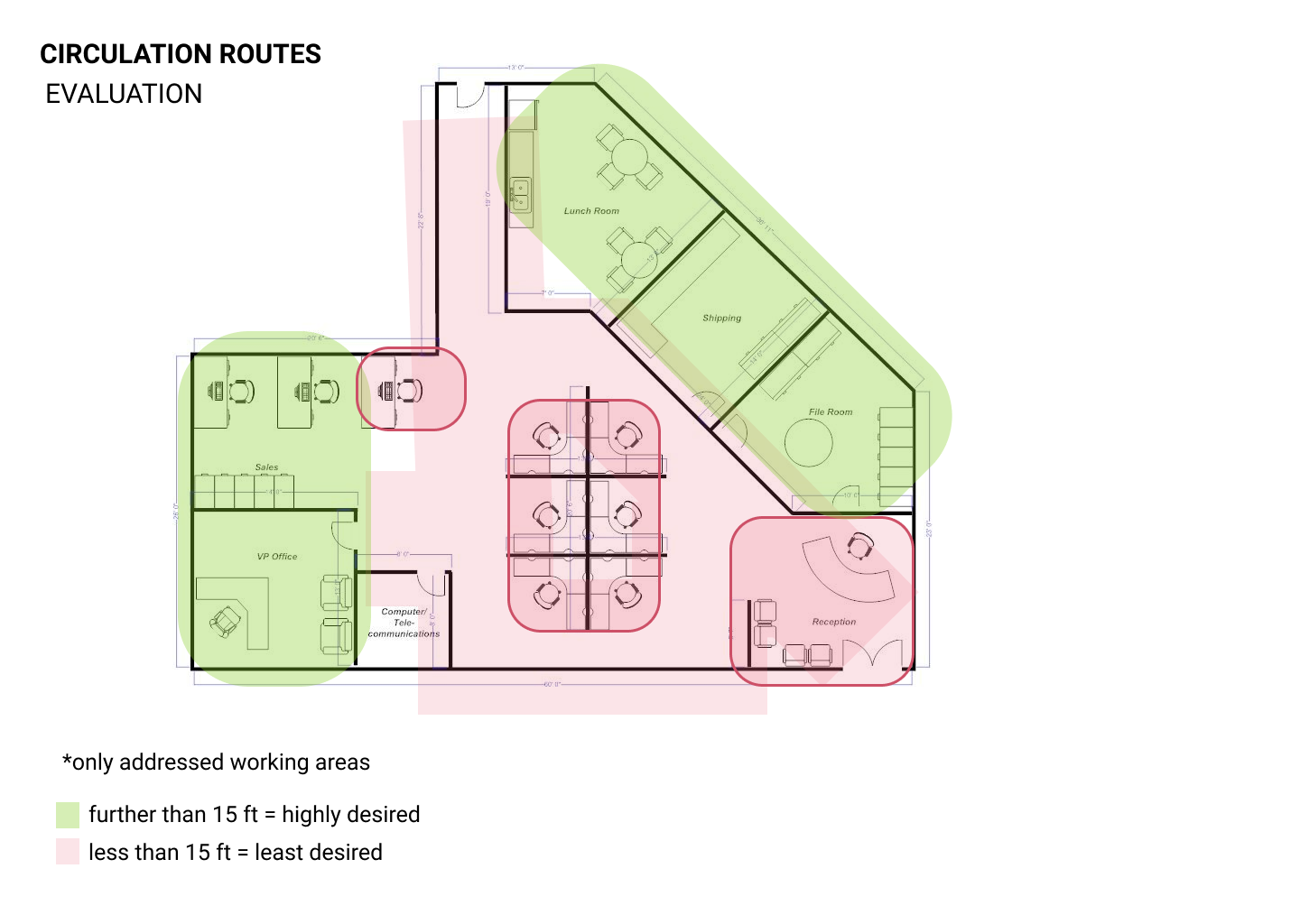
Each component of the floor plan is analyzed by algorithms trained on parameters for inclusion.
These diagrams are visual examples of the defined parameters.